How Scarlett Johansson Rewrote the Rules of the Hollywood Action Star
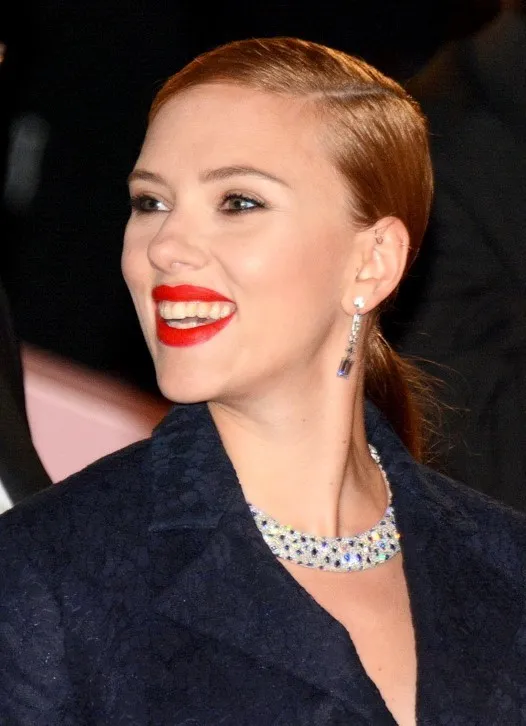
Photo: Georges Biard, CC BY-SA 3.0, via Wikimedia Commons
From Background Player to Total Badass
Cast your mind back to 2010. Iron Man 2 hits theaters, and audiences get their first real look at Scarlett Johansson as Natasha Romanoff — better known as Black Widow. Sure, she spends a chunk of the film playing Natalie Rushman, Tony Stark's suspiciously capable new assistant. But then comes that hallway scene. One woman. A dozen armed guards. About ninety seconds. By the time the dust settles, Natasha has neutralized every single one of them while Happy Hogan fumbles through a single fight in the background.
It was a mic-drop moment, and it announced something important: this wasn't just a love interest with a cool outfit. This was something different entirely.
What makes Johansson's arc in the action genre so fascinating is that it didn't happen overnight. It was built, carefully and deliberately, over years of physical training, creative collaboration, and a genuine commitment to making Natasha Romanoff feel like a real human being rather than a CGI-assisted fantasy.
The Physical Transformation Nobody Talks About Enough
Let's be real — the physical demands of playing Black Widow are no joke. Johansson has spoken in multiple interviews about the grueling preparation required for each MCU appearance, which included everything from strength training and gymnastics conditioning to extensive work with the film's stunt coordinators to master the character's signature fighting style.
That style — a hybrid of various martial arts disciplines combined with acrobatic takedowns — wasn't pulled off a shelf. It was developed specifically for Natasha's character, designed to reflect someone who fights smart rather than just hard. Johansson trained for months before each production, and over time you can actually see the difference on screen. The movement in Black Widow (2021) compared to Iron Man 2 shows a performer who has genuinely internalized a physical vocabulary, not just someone hitting marks.
She also performed a significant portion of her own stunt work, a fact that often gets glossed over in mainstream coverage. Her stunt double, Heidi Moneymaker, has been a consistent collaborator throughout the franchise, and the two developed a genuine working partnership — but Johansson's hands-on approach meant that many of the closeup combat sequences were the actress herself, not a stand-in.
Depth Over Flash: What Actually Sets Her Apart
Here's the thing about a lot of female action heroes in Hollywood — too many of them are defined almost entirely by their physical capability. They're strong, they're skilled, and they're largely emotionally inaccessible. Johansson made a different choice with Natasha from the very beginning.
Even in early appearances where the character had limited screen time, Johansson found ways to suggest a complicated interior life. A glance held a beat too long. A line reading that implied something unsaid. By the time Avengers: Age of Ultron gave Natasha a more substantial emotional storyline — including her complicated feelings about her past as an assassin and her complicated dynamic with Bruce Banner — audiences were already primed to care deeply, because Johansson had been laying that groundwork for years.
This approach reached its fullest expression in Black Widow, which finally gave Natasha her own solo film and centered the story on her found family, her traumatic origins, and her complicated relationship with loyalty and identity. The film wasn't just an action movie — it was a character study that happened to have spectacular set pieces. That balance is genuinely hard to pull off, and it worked because Johansson had spent a decade making sure audiences understood who this woman actually was.
Beyond the MCU: A Pattern, Not a Coincidence
It's worth noting that Johansson's command of action-oriented roles isn't exclusive to the Marvel universe. Her performance in Lucy (2014) showcased a different kind of physical presence — more cerebral, more stylized — while still demonstrating her ability to anchor a high-concept action film. Ghost in the Shell (2017) pushed her into full sci-fi territory, playing a character who is literally more machine than human, which required an entirely different physical and emotional register.
What connects all these roles is a consistent refusal to let the spectacle swallow the performance. Even when the movie around her is leaning hard into visual excess, Johansson finds a way to keep something human at the center.
The Legacy She's Building
It's genuinely difficult to overstate how much Johansson's success in these roles changed the conversation in Hollywood. Before Black Widow became a franchise cornerstone, the conventional wisdom was that female-led superhero films were a commercial risk. Her consistent box office performance across multiple MCU entries helped demolish that argument — and the door she pushed open has since been walked through by characters like Captain Marvel, Shuri, and America Chavez.
That's not a small thing. That's a legacy.
For fans who've been following Johansson's career from the beginning, watching her grow into one of the most physically and dramatically compelling action stars in Hollywood has been one of the genuine pleasures of the past fifteen years. She didn't wait for Hollywood to hand her something better — she built it, one hallway fight scene at a time.
And honestly? We're still not over that Iron Man 2 corridor sequence. Some things just never get old.