From Vulnerable to Empowered: How Scarlett Johansson Became a Driving Force Behind Intimacy Coordination on Set
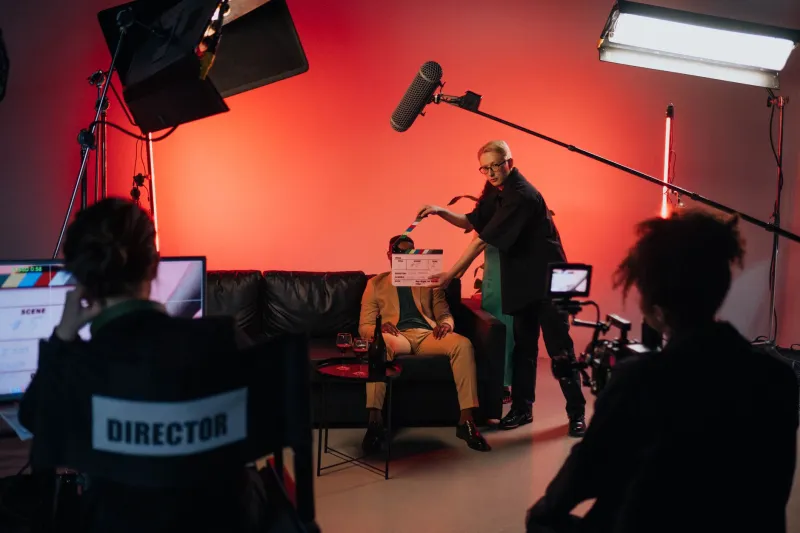
There's a version of Hollywood that most casual fans never see — the one that happens between "action" and "cut" during the most emotionally exposed moments an actor can experience on camera. Intimate scenes, by their very nature, require performers to make themselves vulnerable in front of a crew of dozens. For decades, that vulnerability was largely managed through informal conversations, vague direction, and a whole lot of hoping everyone on set was acting in good faith.
That culture has been changing — and Scarlett Johansson is one of the names that keeps coming up when industry insiders talk about why.
A Candor That Cut Through the Noise
Scarlett has never been the type to give polished, PR-approved non-answers when journalists ask about the harder parts of her job. Over the years, she's spoken with unusual frankness about the discomfort that can come with filming intimate scenes — not in a way that reads as complaint, but in a way that names the reality clearly. That distinction matters.
When a major star with her level of cultural visibility says, out loud, that certain on-set dynamics made her feel exposed or unprotected, it does something that a thousand industry memos can't: it makes other actors feel like they're not alone, and it makes producers realize that silence on these issues is no longer an option.
Her willingness to be honest about those experiences — across interviews stretching back years — helped normalize a conversation that the industry had been quietly avoiding. And conversations, when they reach a certain volume, have a way of becoming policy.
What Intimacy Coordinators Actually Do
For anyone who's newer to the term, intimacy coordinators are trained professionals who serve as a kind of choreographer and advocate for actors during the filming of scenes involving nudity, simulated sex, or any moment that requires significant physical or emotional vulnerability. They work directly with directors and performers to establish clear consent, map out exactly what will be filmed, and ensure that everyone on set understands the boundaries in play.
Think of it like this: fight choreographers have existed in Hollywood for generations. Nobody questions why a stunt coordinator is present when actors are throwing punches or falling off buildings. Intimacy coordinators fill an equivalent role — they just do it for scenes that require a different kind of physical and emotional exposure.
The role was formalized in the US largely through the work of organizations like Intimacy Directors International, founded by Ita O'Brien, who has since coordinated scenes on major productions including Normal People and Sex Education. HBO became one of the first major studios to formally commit to using intimacy coordinators on all productions — a decision that came in the wake of broader industry reckoning following the #MeToo movement.
The Star Power Factor
Here's where Johansson's specific influence becomes interesting from a film analysis standpoint. There's a well-documented dynamic in Hollywood where systemic change tends to accelerate when people at the top of the call sheet start demanding it. Crew members, supporting actors, and newcomers often lack the leverage to push back on uncomfortable situations. A-listers, by contrast, have the kind of contractual and cultural clout that can reshape how an entire production operates.
Scarlett sits at the very top of that hierarchy. She's one of the highest-grossing actors in film history, a two-time Oscar nominee, and someone whose name on a project carries genuine weight with studios and financiers. When she speaks openly about the need for better protections during intimate filming, producers listen in a way they simply might not for someone earlier in their career.
Multiple industry professionals — including casting directors and producers who've spoken to entertainment trade publications over the past few years — have noted that the broader push toward standardized intimacy coordination was accelerated by high-profile performers making it a non-negotiable part of their working conditions. Johansson's public statements on the subject helped create cultural permission for other actors to make similar demands.
Empowering the Next Generation
One of the less-discussed effects of Johansson's transparency is what it's meant for younger or less-established performers watching from the wings. When you're a 22-year-old actor on your first major studio production and something feels off during the prep for an intimate scene, it's genuinely hard to speak up. The power dynamics are real, and the fear of being labeled "difficult" has historically been enough to keep a lot of people quiet.
Seeing someone like Scarlett — with all her experience and industry standing — openly acknowledge that these situations can be uncomfortable, and that it's entirely reasonable to want structured support in place, gives newer performers a framework for advocating for themselves. It's not just inspiration; it's practical permission.
Several acting coaches and on-set advocates have pointed to this trickle-down effect as one of the more underappreciated ways that established stars shape industry culture. They don't just make movies — they model what it looks like to take your own wellbeing seriously in a business that has historically asked performers to do the opposite.
Where Things Stand Now
The adoption of intimacy coordinators across Hollywood has grown significantly since the late 2010s. Major streaming platforms — Netflix, HBO, Hulu — have all moved toward making the role standard on productions with relevant content. Union negotiations have increasingly included language around intimacy protocols. The role is now taught in some acting conservatory programs as something performers should know how to work with before they ever step on a professional set.
Is the work done? Not even close. There are still productions — particularly lower-budget independent films — where intimacy coordination remains an afterthought or an expense that gets cut. There are still directors who view the presence of a coordinator as an intrusion on their creative process rather than a professional resource. Progress in Hollywood rarely moves in a straight line.
But the baseline has shifted. The conversation that used to happen only in greenrooms and between trusted friends is now happening in trade publications, union contracts, and production meetings. And the voices that helped make that shift happen — Scarlett Johansson's among them — deserve to be part of that story.
Why This Matters to Fans
For those of us who've followed Scarlett's career closely, this dimension of her work adds another layer to how we understand her as a performer. She's not just someone who shows up and delivers incredible performances — she's someone who has actively thought about the conditions under which good performances are possible, and who has used her platform to push for those conditions to exist for everyone, not just stars with enough leverage to demand them.
That's a kind of advocacy that doesn't always make headlines, but it shapes the industry in ways that last. And honestly? It makes watching her work hit a little differently knowing that she's been fighting for the people behind the camera just as hard as she's been fighting for the roles in front of it.

