The Power of Saying Nothing: How Scarlett Johansson Turns Silence Into Her Most Devastating Weapon
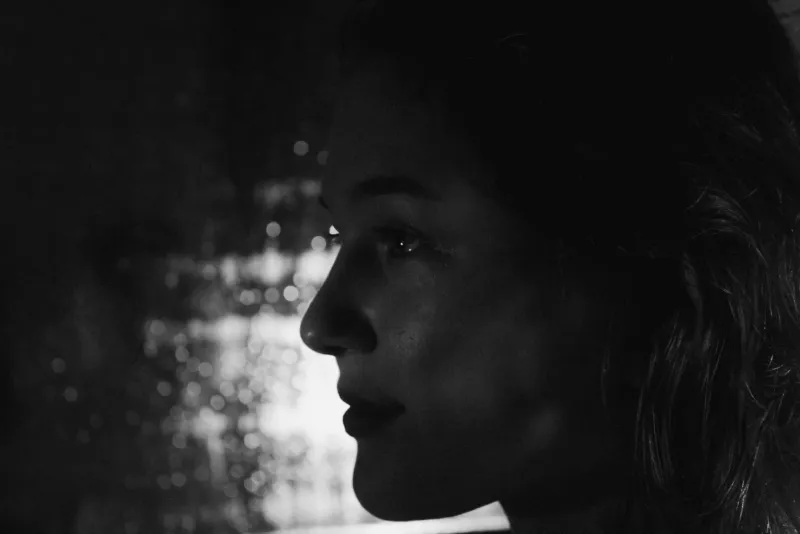
There's a certain kind of acting that announces itself. You know it when you see it — the trembling lip, the raised voice, the dramatic pivot toward the camera. It's the stuff awards show clips are made of, and honestly, it works. But then there's the other kind. The kind where an actor barely breathes, and somehow you feel everything.
Scarlett Johansson has always been capable of the first kind. She's done the action, the intensity, the full-throttle emotional breakdowns. But what consistently separates her from the pack — what makes rewatching her films feel like discovering something new every time — is her absolute mastery of the second kind. The quiet kind. The kind where less isn't just more; it's everything.
What Restraint Actually Looks Like (And Why It's So Hard)
Before we get into specifics, it's worth acknowledging something: doing nothing on camera is genuinely one of the hardest things an actor can do. When there's no dialogue to hide behind, no physical action to channel your energy into, you're just... there. The camera doesn't lie, and it has a way of amplifying whatever's happening internally — or exposing when nothing is.
Johansson has spoken in interviews about her instinct to trust the material and resist the urge to over-explain a moment. That philosophy shows up in her work in ways that are almost impossible to fake. She doesn't reach for emotion; she lets it settle. And the result is a kind of screen presence that feels less like performance and more like witnessing.
Lost in Translation and the Scene That Started It All
If you want to pinpoint the moment it became obvious that Johansson was operating on a different level, start with Sofia Coppola's Lost in Translation (2003). She was just 18 years old, and she spent much of the film doing what most young actors would consider career suicide: being quiet.
The final scene — the whispered goodbye between her character Charlotte and Bill Murray's Bob Harris — is the most famous example. We never hear what he says. The camera holds on her face as she listens, and then she pulls back with this small, complicated smile that somehow contains grief, relief, gratitude, and acceptance all at once. No monologue. No dramatic score swelling beneath her. Just a face doing the work.
But honestly, it's not even the most impressive moment in the film. Watch the scene where Charlotte sits alone by the window in her hotel room, staring out at the Tokyo skyline in the early morning light. She's barely moving. Her expression shifts almost imperceptibly. And yet you feel the full weight of her loneliness, her uncertainty about her marriage, her hunger for something she can't quite name. Coppola pointed the camera at her and trusted her to fill the silence. She did.
Marriage Story and the Art of Holding It Together
Fast forward to 2019 and Noah Baumbach's Marriage Story, which gave Johansson arguably her most emotionally complex role in years. The film is full of raw, loud moments — the apartment fight scene is the one everyone talks about — but the quieter beats are where her performance really lives.
There's a moment early in the film where her character Nicole sits listening as her husband Charlie (Adam Driver) reads aloud the letter he wrote about her — a letter she never got to hear because she refused to participate in the exercise. She's completely still. Her face cycles through something that's hard to name: longing, sadness, maybe a flicker of doubt about the choice she's making. She doesn't cry. She doesn't speak. She just receives it.
That scene works because of everything Johansson doesn't do. A less confident actor might have pushed for a visible reaction, something the audience could clock and respond to. Instead, she trusts the viewer to meet her halfway, to bring their own emotional intelligence to what they're watching. It's a genuinely collaborative kind of acting — and it's rare.
Her and the Challenge of Invisible Performance
Spike Jonze's Her (2013) pushed the concept of restrained performance to its logical extreme. Johansson voiced Samantha, the AI operating system who becomes the emotional center of the entire film, without ever appearing on screen. No body language, no eye contact, no physical presence whatsoever.
What she had was her voice — and silence. The pauses between Samantha's words carry as much meaning as the words themselves. There's a moment late in the film where Samantha tries to explain to Theodore (Joaquin Phoenix) what she's experiencing as she evolves beyond human understanding. The hesitations in Johansson's delivery communicate something language genuinely can't: the sensation of outgrowing a form of love you still feel.
She earned an Oscar nomination conversation (though not an actual nomination, to the ongoing frustration of fans) for a performance where her face was never once on screen. That's how much weight she packed into breath and timing alone.
The MCU Moments That Don't Get Enough Credit
It would be easy to write off the Marvel films as pure spectacle — and sure, there's plenty of that. But Johansson carved out quieter, more interior moments for Natasha Romanoff even within the franchise's action-heavy framework.
The Budapest conversation in The Avengers (2012) is a fan favorite for its humor, but watch her face when Hawkeye (Jeremy Renner) brings it up. There's a flash of something — nostalgia, maybe pain — that passes across her expression before the quip lands. It's a half-second of vulnerability in the middle of a battle sequence, and it does more to establish the depth of that friendship than any amount of exposition could.
Black Widow (2021) has its share of those moments too, particularly in the scenes where Natasha reconnects with her surrogate family. The dinner table sequence is played largely for comedy, but Johansson keeps threading something more melancholy through it — the ache of someone who never really got to have what she's pretending to have had.
Why This Matters for How We Watch Her
Here's the thing about Scarlett Johansson's quietest scenes: they reward attention. In an era of content that's engineered to grab you in the first three seconds and never let go, her most powerful work asks you to slow down and pay attention. To notice the slight tension around her jaw. The way her eyes go still. The breath she takes before she doesn't say what she's thinking.
That's not just good acting — it's a kind of artistic generosity. She's trusting the audience to be present with her, to do some of the emotional work themselves. And when it lands, it lands harder than any explosion or chase sequence ever could.
Next time you revisit her filmography, try watching for what she's not doing. You might be surprised how much is happening there.